


Adaptive Car Seats for Children: A Guide for Special Needs & Safe Transportation
Adaptive Car Seats for Children: A Guide for Special Needs & Safe Transportation
For many families, traveling by car is part of everyday life. Children need to get to school, medical appointments, therapy sessions, family activities, and community events. But for children with disabilities, developmental delays, autism, neurological conditions, low muscle tone, poor trunk control, or other physical and medical needs, a standard car seat may not provide the support they require.
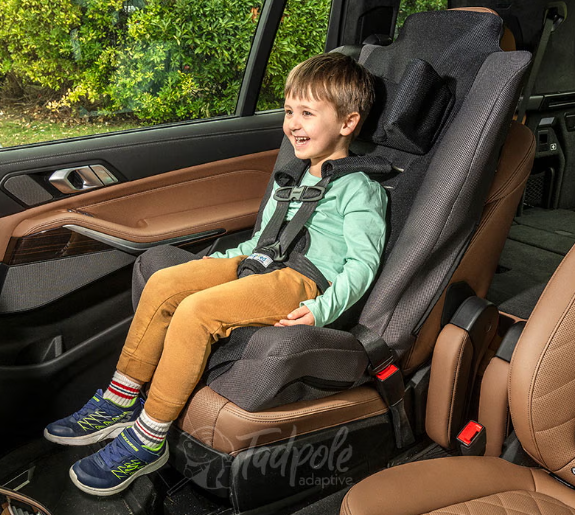
Adaptive car seats for children are specially designed transportation solutions that can provide additional positioning, support, stability, and comfort for children who may not fit safely or appropriately in a conventional car seat.
Choosing the right special needs car seat is about more than finding a larger or more supportive seat. The appropriate solution should consider the child's age, size, medical and functional needs, posture, behavior, transportation environment, and ability to maintain a safe position during travel.
At WONACE Medical Supply, families can explore pediatric medical equipment and adaptive equipment designed to support children with special needs and mobility challenges. WONACE currently offers pediatric car seat options including the Spirit Plus Car Seat and the Convaid Carrot 3 Special Needs/Autistic Car Seat.
What Are Adaptive Car Seats for Children?
Adaptive car seats for children are specialized transportation systems designed for children who may need additional positioning or support beyond what a standard pediatric car seat provides.
They may be appropriate for children who have difficulty:
Maintaining an upright sitting position
Controlling their head or trunk
Remaining properly positioned during transportation
Tolerating traditional car-seat positioning
Sitting safely because of physical limitations
Remaining safely restrained because of behavioral or developmental challenges
Maintaining proper alignment during longer trips
An adaptive car seat may incorporate specialized positioning features that help support the child's individual needs.
Depending on the product, features may include:
Adjustable head support
Lateral trunk support
Pelvic positioning
Adjustable harness systems
Reclining or positioning options
Adjustable seat depth
Adjustable foot support
Growth adjustments
Additional padding
Specialized positioning components
Not every child needs an adaptive car seat, and not every adaptive car seat is appropriate for every child. A qualified healthcare professional should help determine whether a particular system is appropriate.
Why Do Children Need Special Needs Car Seats?
A standard car seat is designed for children who can generally maintain an appropriate seated position while properly using the restraint system.
Some children with disabilities or complex medical needs may have difficulty maintaining that position.
For example, a child may have:
Cerebral palsy
Autism
Developmental disabilities
Neurological disorders
Hypotonia or low muscle tone
Poor trunk control
Muscular disorders
Spina bifida
Seizure disorders
Physical disabilities
Developmental delays
Behavioral or sensory challenges
Other conditions affecting safe transportation
In these situations, a special needs car seat may provide additional positioning and support.
The goal is not simply to make the child more comfortable. Proper transportation positioning can help support safer and more appropriate restraint use.
Adaptive Car Seats for Children With Disabilities
Children with physical disabilities can have significantly different seating and positioning needs.
For example, a child with limited trunk control may lean forward or sideways while riding in a vehicle. A child with limited head control may need additional head support. A child with increased muscle tone may require positioning assistance to maintain a functional seated posture.
An adaptive car seat for a child with disabilities may provide additional support that helps accommodate these needs.
The child's healthcare team may consider:
Postural control
Head control
Pelvic positioning
Muscle tone
Range of motion
Growth
Ability to tolerate the seat
Transfer needs
Caregiver handling
Transportation frequency
Vehicle configuration
A pediatric physical therapist, occupational therapist, physician, or other qualified professional can help determine the appropriate transportation equipment based on the child's individual needs.
Adaptive Car Seats for Children With Autism
Parents frequently search for car seats for autistic children because some children with autism may have difficulty remaining properly positioned during transportation.
Children with autism may experience:
Sensory sensitivities
Difficulty remaining seated
Behavioral challenges
Difficulty understanding transportation safety
Elopement or escape behaviors
Difficulty tolerating conventional restraints
Need for additional structure and positioning
A specialized transportation system may provide additional support depending on the child's needs.
However, an adaptive car seat should not be selected solely because a child has an autism diagnosis. The decision should be based on the child's actual functional and transportation needs.
WONACE provides specialized pediatric and adaptive equipment for children with special needs, including adaptive transportation equipment and other pediatric DME.
What to Look for in an Adaptive Car Seat
When selecting adaptive car seats for children, families should look beyond the appearance of the product.
Important considerations may include:
Proper Fit
The car seat should be appropriately sized for the child's current height, weight, and body proportions.
Growth should also be considered, particularly when the equipment is intended for long-term use.
Head and Trunk Support
Children with limited head or trunk control may need additional positioning features.
Pelvic Positioning
Maintaining appropriate pelvic positioning can be important for overall seated posture and alignment.
Harness and Restraint System
The restraint system should be appropriate for the child and used exactly according to the manufacturer's instructions.
Adjustability
Some adaptive car seats provide multiple adjustment options that allow the equipment to accommodate growth or changing needs.
Vehicle Compatibility
The equipment must be appropriate for the vehicle in which it will be used.
Families should verify compatibility and follow the manufacturer's installation requirements.
Ease of Use for Caregivers
Parents and caregivers may need to transfer the child into and out of the vehicle frequently.
A transportation system that is difficult to operate can create unnecessary challenges during daily routines.
Adaptive Car Seat vs. Standard Car Seat
A standard pediatric car seat may be appropriate for many children.
However, a child with complex positioning or physical needs may require a more specialized transportation solution.
Standard Car Seat | Adaptive/Special Needs Car Seat |
Designed for typical pediatric positioning | Designed for additional positioning needs |
Limited customization | More positioning options |
Generally designed around developmental age/size | Can address individual functional needs |
Standard restraint configuration | May include specialized positioning features |
Appropriate for many children | May be appropriate for children with disabilities or complex needs |
The most important consideration is not whether a product is labeled "adaptive."
The most important consideration is whether it appropriately meets the child's transportation and positioning needs.
Pediatric Car Seats for Children With Special Needs
A pediatric car seat for a child with special needs may be considered when conventional transportation equipment does not adequately accommodate the child's functional requirements.
Parents may want to discuss the following questions with their child's healthcare team:
Does my child maintain a safe seated position?
Does my child have adequate head control?
Does my child have adequate trunk control?
Does my child slide forward or lean sideways?
Does my child attempt to escape the restraint?
Does my child have sensory or behavioral challenges during transportation?
Does my child require additional positioning?
Does my child require specialized head or trunk support?
How frequently does my child travel?
Will the equipment fit our vehicle?
Will the equipment accommodate my child's growth?
These questions can help the family and healthcare team determine whether specialized transportation equipment should be considered.
The Convaid Carrot 3 Special Needs Car Seat
One specialized pediatric transportation option available through WONACE is the Convaid Carrot 3 Special Needs/Autistic Car Seat.
WONACE currently lists the Convaid Carrot 3 as a pediatric special-needs/autistic car seat.
Families considering this type of equipment should review the manufacturer's specifications and work with qualified professionals to determine whether the product is appropriate for their child's needs.
Spirit Plus Car Seat for Pediatric Transportation
WONACE also lists the Spirit Plus Car Seat within its pediatric and adaptive equipment categories.
Families should evaluate the child's individual size, positioning requirements, medical needs, and vehicle configuration before selecting any specialized car seat.
Can Adaptive Car Seats Be Covered by Insurance?
One of the most common questions parents ask is:
"Will insurance pay for an adaptive car seat?"
The answer depends on the child's insurance plan, medical necessity, equipment classification, documentation, authorization requirements, and payer-specific policies.
Some pediatric adaptive equipment may be eligible for insurance coverage when applicable requirements are met. However, coverage should never be assumed simply because a child has a disability or medical diagnosis.
WONACE's pediatric medical supply program states that its team assists families with insurance verification, physician coordination, and equipment fitting.
Depending on the equipment and insurance plan, documentation may include:
Physician prescription
Letter of medical necessity
Clinical evaluation
Physical therapy evaluation
Occupational therapy evaluation
Documentation of functional limitations
Explanation of why standard equipment is inadequate
Product specifications
Prior authorization
Insurance-specific forms
Does Insurance Cover Special Needs Car Seats?
Some insurance plans may cover adaptive equipment when the item meets the plan's requirements for medical necessity and benefit coverage.
However, coverage varies significantly.
Before purchasing an adaptive car seat, families should ask their insurance company:
Is adaptive transportation equipment a covered benefit?
Is prior authorization required?
Does the plan require a prescription?
What clinical documentation is required?
Is a letter of medical necessity required?
Does the equipment need to be supplied by an in-network DME provider?
Are there specific HCPCS or billing requirements?
What is the expected patient responsibility?
WONACE can assist families with the insurance verification and DME process.
How to Get an Adaptive Car Seat Through Insurance
The process may involve several steps.
Step 1: Discuss Your Child's Needs
Talk with your child's pediatrician, physical therapist, occupational therapist, or other appropriate healthcare professional about transportation safety and positioning.
Step 2: Obtain Clinical Documentation
The healthcare provider may document the child's functional limitations and explain why standard transportation equipment is insufficient.
Step 3: Select Appropriate Equipment
A DME provider can help identify an adaptive car seat that may be appropriate for the child's needs.
Step 4: Verify Insurance Benefits
The DME provider or family can contact the insurance company to determine whether the equipment may be covered.
Step 5: Submit Prior Authorization if Required
Some insurance plans require prior authorization before equipment can be provided.
Step 6: Complete the Ordering Process
Once the applicable insurance requirements are satisfied, the DME provider can coordinate ordering and delivery.
Coverage, authorization, and patient responsibility vary by plan, so families should confirm their specific benefits.
Why Pediatric DME Experience Matters
Obtaining adaptive equipment for a child can involve more than simply placing an online order.
Children with complex needs may require coordination between:
Parents
Caregivers
Pediatricians
Physical therapists
Occupational therapists
Case managers
Care coordinators
Insurance companies
DME suppliers
A DME provider experienced in pediatric equipment can help coordinate these pieces.
WONACE states that it works with families, care coordinators, therapists, and healthcare providers to help identify pediatric equipment solutions and navigate insurance requirements.
Adaptive Transportation Equipment Is Part of Pediatric Mobility
Transportation is one part of a child's overall mobility and accessibility needs.
A child who needs an adaptive car seat may also benefit from other pediatric DME, including:
Pediatric wheelchairs
Adaptive strollers
Gait trainers
Standing frames
Adaptive seating
Activity chairs
Adaptive tricycles
Bathing equipment
Hygiene and toileting systems
Positioning equipment
Safety beds
WONACE's pediatric equipment offerings include pediatric wheelchairs, special needs strollers, adaptive tricycles, gait trainers, adaptive seating, and other specialized equipment.
Adaptive Car Seats in Houston, Texas
Families searching for adaptive car seats in Houston, special needs car seats in Houston, or pediatric DME may want to work with a medical equipment provider familiar with children's complex equipment needs.
WONACE Medical Supply is based in Houston and provides pediatric medical equipment and adaptive equipment for families in Houston and surrounding communities, with nationwide service available.
WONACE serves communities including:
Houston
Katy
Cypress
Sugar Land
Pearland
The Woodlands
Conroe
Tomball
Humble
Missouri City
League City
Pasadena
Richmond
And surrounding areas
Choosing the Right Adaptive Car Seat for Your Child
The right adaptive car seat for children should be selected based on the child's individual needs—not simply based on diagnosis or age.
Consider:
Safety: Does the system provide an appropriate transportation restraint configuration?
Positioning: Does it provide the support the child needs to maintain an appropriate seated position?
Growth: Can the system accommodate the child's current size and expected growth?
Comfort: Can the child tolerate the equipment during transportation?
Vehicle compatibility: Is the equipment appropriate for the family's vehicle?
Caregiver needs: Can parents and caregivers safely and efficiently use the equipment?
Medical necessity: Is there documentation supporting why specialized equipment is required?
Insurance: Does the family's insurance plan provide a benefit for this type of equipment?
Professional support: Can the DME supplier coordinate with the child's healthcare and therapy team?
Frequently Asked Questions About Adaptive Car Seats for Children
What is an adaptive car seat for children?
An adaptive car seat is specialized transportation equipment designed to provide additional positioning, support, or restraint options for children whose physical, developmental, behavioral, or medical needs may not be adequately addressed by a conventional car seat.
What is a special needs car seat?
A special needs car seat is a pediatric transportation system designed for children who may require additional support because of disabilities, developmental conditions, neurological conditions, physical limitations, or other functional needs.
What is the best car seat for an autistic child?
There is no single best car seat for every autistic child. The appropriate option depends on the child's size, behavior, sensory needs, positioning, ability to remain safely restrained, and other individual factors. A healthcare professional and qualified DME provider can help determine whether an adaptive transportation system is appropriate.
Can a disabled child use a regular car seat?
Some children with disabilities can safely use a standard car seat. Others may require specialized equipment because they cannot maintain appropriate positioning or safely use a conventional restraint system. A child's individual functional needs should be evaluated.
Can insurance pay for an adaptive car seat?
Some insurance plans may cover adaptive transportation equipment when the equipment is a covered benefit and applicable medical-necessity and authorization requirements are met. Coverage varies by plan and should be verified before ordering.
Where can I buy a special needs car seat?
Families can explore pediatric DME providers that specialize in adaptive equipment. WONACE Medical Supply offers pediatric adaptive equipment, including specialized car seat options, and assists families with insurance verification and equipment coordination.
Does WONACE offer adaptive car seats?
Yes. WONACE currently lists the Spirit Plus Car Seat and Convaid Carrot 3 Special Needs/Autistic Car Seat among its pediatric and adaptive equipment offerings.
Help Your Child Travel With Greater Support and Confidence
For children with disabilities and complex medical needs, transportation is an important part of everyday life.
The right adaptive car seat for children can help families address positioning, support, and transportation challenges while making it easier to travel to school, therapy, medical appointments, family activities, and community events.
Choosing the right equipment starts with understanding the child's individual needs.
If your child needs a special needs car seat, pediatric adaptive equipment, adaptive stroller, pediatric wheelchair, or other pediatric DME, WONACE Medical Supply can help you explore available options and navigate the equipment and insurance process.
Serving families, caregivers, therapists, and healthcare providers in Houston, Texas and nationwide.
Get Started With WONACE Medical Supply
If your child or loved one needs autism medical equipment, special needs equipment, adaptive equipment, pediatric DME, mobility equipment, or home safety equipment, WONACE Medical Supply is ready to help.
Our team works with families, caregivers, healthcare providers, therapists, and care coordinators to help connect individuals with appropriate medical equipment and insurance resources.
Contact WONACE Medical Supply
Website: wonace.com Phone: 281-810-3123 Fax: 877-787-4705
WONACE Medical Supply — Serving families, caregivers, therapists, and healthcare providers in Houston, Texas and nationwide.
Conclusion
Choosing to get your CGM from a Durable Medical Equipment provider like WONACE Medical Supply. From personalized service and expert support to simplified insurance billing and comprehensive follow-up care, we are dedicated to helping you manage your diabetes effectively. Contact us today to learn more about our CGM devices and how we can assist you in achieving better glucose control.
Contact WONACE Medical Supply for medical supplies near you.
Contact
WONACE Medical Supply is a Medicare-approved company trusted by medical doctors, insurance, and hospitals.
Visit: WONACE.COM


Comments